
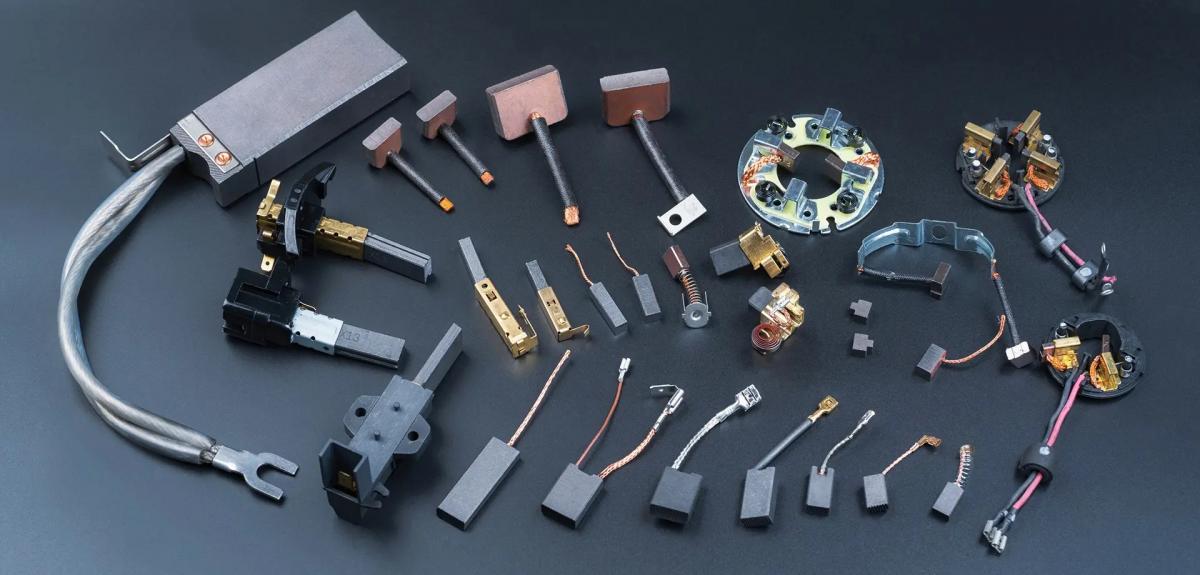
Advanced Carbon Solutions for Automotive Motors and Electrical Systems
Supporting Reliable Performance in the Automotive Industry
The automotive industry relies on a wide range of electrical and electromechanical components to ensure vehicle performance, operational safety, and long-term reliability. From conventional internal combustion engine vehicles to hybrid and electric vehicles, carbon-based components continue to play an important role in many automotive electrical systems.
Carbon materials are widely used in automotive applications because of their electrical conductivity, self-lubricating properties, wear characteristics, and ability to maintain electrical contact under demanding operating conditions.
Automotive carbon brushes, in particular, are essential components in various electric motors, starters, alternators, and other rotating electrical equipment.
As vehicle technologies continue to evolve, manufacturers and aftermarket suppliers require carbon components with increasingly specific electrical, mechanical, and dimensional characteristics.
At VOCARBON, we focus on carbon brushes, carbon brush holders, slip rings, and related electrical contact components for industrial and automotive applications. We support customers seeking reliable replacement products and customized carbon solutions based on technical drawings, specifications, or physical samples.
1. The Importance of Carbon Components in Automotive Applications
Carbon components have been used in automotive electrical systems for decades. Their ability to provide sliding electrical contact makes them suitable for various motor and generator applications.
Unlike fixed electrical connections, carbon brushes can transfer electrical current between stationary and rotating components while allowing continuous movement.
This makes them particularly important in automotive equipment that relies on rotating electrical machines.
Common automotive applications include:
-
Starter motors.
-
Automotive alternators.
-
DC electric motors.
-
Power window motors.
-
Windshield wiper motors.
-
Blower motors and HVAC systems.
-
Seat adjustment motors.
-
Electric fuel pumps.
-
Other auxiliary automotive motors.
The performance of these components can directly influence the reliability of the electrical systems in which they are installed.
Proper material selection, dimensional accuracy, and consistent manufacturing quality are therefore essential when producing automotive carbon components.
2. Automotive Carbon Brushes for Reliable Electrical Contact
Carbon brushes are among the most important carbon components used in automotive electrical equipment.
They maintain electrical contact between stationary electrical circuits and rotating components, allowing current to flow while the motor or generator operates.
Depending on the application, automotive carbon brushes may be manufactured using different carbon and graphite compositions.
Common material categories include:
Electrographite Carbon
Electrographite materials offer useful electrical and mechanical characteristics for selected automotive motor applications. Their properties can be adjusted to meet different operating requirements.
Resin-Bonded Carbon
Resin-bonded carbon brushes are used in various applications where specific mechanical strength, electrical characteristics, and wear properties are required.
Metal-Graphite Carbon
Metal-graphite materials combine graphite with metallic components, commonly copper, to provide suitable electrical conductivity for selected low-voltage and high-current applications.
The correct carbon brush grade depends on the motor design, electrical load, operating speed, contact pressure, and working environment.
A carbon brush that performs well in one motor may not be suitable for another, even if their dimensions are similar.
For this reason, automotive carbon brush selection should consider both technical specifications and actual application conditions.
3. Carbon Brushes for Automotive Starter Motors
Starter motors are essential components in conventional internal combustion engine vehicles.
Their function is to provide the initial rotational force required to start the engine. During this process, the starter motor operates under relatively high electrical loads for short periods.
Carbon brushes in starter motors must therefore be suitable for demanding current conditions and repeated starting cycles.
Important performance considerations include:
-
Electrical conductivity.
-
Contact voltage drop.
-
Mechanical strength.
-
Wear resistance.
-
Stable contact with the commutator.
-
Compatibility with the motor's operating characteristics.
The selection of suitable carbon brush materials can help maintain reliable current transmission and reduce unnecessary wear.
For replacement applications, dimensions, lead configurations, terminal arrangements, and original motor specifications should be carefully checked.
VOCARBON supports customers looking for automotive carbon brushes and customized replacement components for suitable starter motor applications.
4. Carbon Components for Automotive Alternators
Automotive alternators generate electrical power to supply vehicle electrical systems and recharge the battery while the engine is running.
Many conventional alternator designs use brushes and slip rings to transfer excitation current to the rotating field winding.
In these systems, carbon brushes work against the alternator slip rings to maintain electrical contact during rotation.
The performance of the brush assembly can affect the stability of the excitation circuit and the overall reliability of the alternator.
When selecting replacement alternator brushes, important factors include:
-
Brush dimensions.
-
Carbon material grade.
-
Electrical characteristics.
-
Flexible lead configuration.
-
Spring pressure.
-
Slip ring contact conditions.
-
Alternator manufacturer and model.
Excessive brush wear, poor contact, or damaged electrical connections may result in charging system problems.
Regular inspection and suitable replacement components help support reliable alternator operation.
5. Carbon Brushes in Automotive Electric Motors
Modern vehicles contain numerous electric motors that perform different functions.
Even relatively simple vehicle systems may include multiple motors for window operation, windshield wiping, ventilation, seat adjustment, and other auxiliary functions.
Many of these applications use compact electric motors with specific dimensional and electrical requirements.
Carbon brushes used in automotive motors must be designed according to the operating characteristics of each motor.
Key considerations include:
Compact Dimensions
Automotive motors often have limited installation space. Carbon brushes must meet precise dimensional requirements to ensure proper assembly and movement.
Electrical Performance
The brush material should provide suitable conductivity and contact characteristics for the intended voltage and current conditions.
Wear Characteristics
The brush should maintain suitable performance throughout its expected service life under the specified operating conditions.
Mechanical Compatibility
Brush dimensions, lead structures, connection methods, and contact geometry must match the motor design.
Operating Environment
Temperature fluctuations, vibration, dust, moisture, and other environmental factors may influence brush performance.
VOCARBON recognizes the importance of dimensional consistency and application-specific material selection for automotive carbon components.
6. Carbon Components for Hybrid and Electric Vehicles
The development of hybrid and electric vehicles has significantly changed the automotive electrical landscape.
Electric vehicles rely on advanced electric drive systems, power electronics, battery technology, and various auxiliary motors.
It is important to recognize that many modern EV traction motors use brushless designs, which do not require conventional carbon brushes for rotor current transmission.
However, carbon-based components continue to have applications in selected automotive systems, including:
-
Auxiliary DC motors.
-
Electric actuators.
-
Certain cooling and ventilation motors.
-
Selected hybrid vehicle electrical systems.
-
Slip ring and specialized rotating electrical assemblies.
-
Other auxiliary electromechanical equipment.
In addition, specialized carbon materials may be used in certain automotive electrical and mechanical applications, depending on the design requirements.
As automotive technology develops, material suppliers must continue to understand changing equipment structures and application-specific requirements.
VOCARBON focuses on providing carbon brushes and related electrical contact components for suitable automotive and electromechanical applications.
7. Selecting the Right Carbon Material for Automotive Applications
Carbon material selection is a critical part of automotive component development and replacement.
Different applications require different combinations of electrical conductivity, mechanical strength, friction characteristics, and wear resistance.
The following parameters should be considered when selecting carbon materials:
Electrical Resistivity
Electrical resistivity influences current transmission and the electrical behavior of the contact interface.
Hardness
Carbon brush hardness affects mechanical wear and interaction with the commutator or slip ring.
Bulk Density
Material density is one of the characteristics used when evaluating carbon brush grades and manufacturing consistency.
Friction Coefficient
Friction influences operating temperature, wear, and contact stability.
Flexural Strength
Mechanical strength is important for resisting damage during installation and operation.
Wear Rate
Wear characteristics should be evaluated under representative operating conditions rather than considered independently of the machine design.
No single carbon material is suitable for every automotive application. Proper selection requires an understanding of the electrical machine and its operating environment.
8. Manufacturing Customized Automotive Carbon Components
Automotive replacement parts frequently involve specific dimensions, material grades, and connection configurations.
In some cases, customers may need replacement components for discontinued motor models or specialized equipment that cannot be easily serviced using standard catalogue products.
VOCARBON supports customized carbon component requirements based on available technical information.
Customers can provide:
-
Original part numbers.
-
Carbon brush dimensions.
-
Material specifications.
-
Technical drawings.
-
Product photographs.
-
Physical samples.
-
Motor or alternator manufacturer information.
Based on the available information, we can review the product structure, dimensions, and material requirements and discuss manufacturing feasibility.
For carbon brushes, important details include width, thickness, length, lead length, terminal configuration, and contact surface design.
For brush holder assemblies, mounting dimensions, spring arrangements, and electrical connections should also be provided whenever possible.
Our objective is to help customers obtain suitable replacement carbon components that match their actual equipment requirements.
9. Quality and Consistency in Automotive Carbon Component Manufacturing
Automotive electrical components require consistent dimensional and material characteristics.
Small variations in carbon brush dimensions, material properties, or connection structures may influence assembly compatibility and operating performance.
Important manufacturing and inspection considerations include:
-
Raw material selection.
-
Material formulation and processing.
-
Dimensional accuracy.
-
Surface finish.
-
Flexible lead attachment.
-
Terminal and connection quality.
-
Visual inspection.
-
Relevant electrical and mechanical testing.
Testing requirements should be determined according to the specific product and customer specifications.
For replacement projects, comparison with original samples and drawings can help establish the required dimensional and structural characteristics.
VOCARBON emphasizes the importance of understanding product requirements before confirming a suitable manufacturing solution.
10. Why Choose VOCARBON for Carbon Component Solutions?
VOCARBON focuses on carbon brushes, brush holders, slip rings, and related electrical contact components for different industrial and automotive applications.
We understand that customers need more than a standard product catalogue. They also need suppliers who can understand technical requirements, evaluate replacement components, and support customized projects.
Our approach includes:
Application-Oriented Product Selection
We consider the intended motor or electrical equipment application when evaluating carbon brush requirements.
Customized Replacement Solutions
We welcome inquiries based on technical drawings, specifications, existing part numbers, or physical samples.
Multiple Product Configurations
We support different carbon brush dimensions, material requirements, flexible lead arrangements, and related brush holder configurations.
Technical Communication
We work with customers to clarify product details and evaluate technical requirements before proceeding with a project.
Industrial and Automotive Applications
Our product focus covers suitable electrical contact components used in motors, generators, slip ring systems, and automotive electrical equipment.
11. Contact VOCARBON for Automotive Carbon Component Requirements
Reliable carbon components remain important to many automotive electrical systems.
From starter motors and alternators to auxiliary electric motors and specialized rotating equipment, selecting suitable carbon brushes and related components helps support stable electrical contact and dependable operation.
Whether you are an automotive parts distributor, motor manufacturer, aftermarket supplier, or electrical equipment maintenance company, VOCARBON welcomes your inquiries.
If you are looking for automotive carbon brushes, customized carbon components, or replacement parts manufactured according to drawings and samples, please contact our team.
Send us your product specifications, part numbers, drawings, or photographs. We will review your requirements and discuss suitable solutions for your application.
VOCARBON – Carbon Brush and Electrical Contact Solutions for Automotive and Industrial Applications.
Website: https://www.vocarbon.com/
Email: sales@vocarbon.com