
Carbon Brushes: Types, Grades, Working Principles, and Selection Guide
Carbon brushes are essential electrical contact components used in many electric motors, generators, alternators, and rotating electrical machines. Although relatively small, they play an important role in transferring electrical current between stationary and rotating parts.
The performance of a carbon brush can directly influence electrical contact stability, machine efficiency, maintenance intervals, and the service life of related components.
However, not all carbon brushes are the same. Different machines require different brush materials, grades, dimensions, and operating characteristics. Choosing an unsuitable carbon brush may result in excessive wear, sparking, overheating, unstable current transfer, or damage to the commutator or slip ring.
This guide explains how carbon brushes work, the main types and material grades available, and the key factors to consider when selecting the right carbon brush for industrial applications.
VOCARBON provides carbon brushes, carbon brush holders, slip ring components, and customized electrical carbon products for various industrial requirements.
1. What Is a Carbon Brush?
A carbon brush is an electrical contact component that transfers current between a stationary electrical circuit and a rotating component.
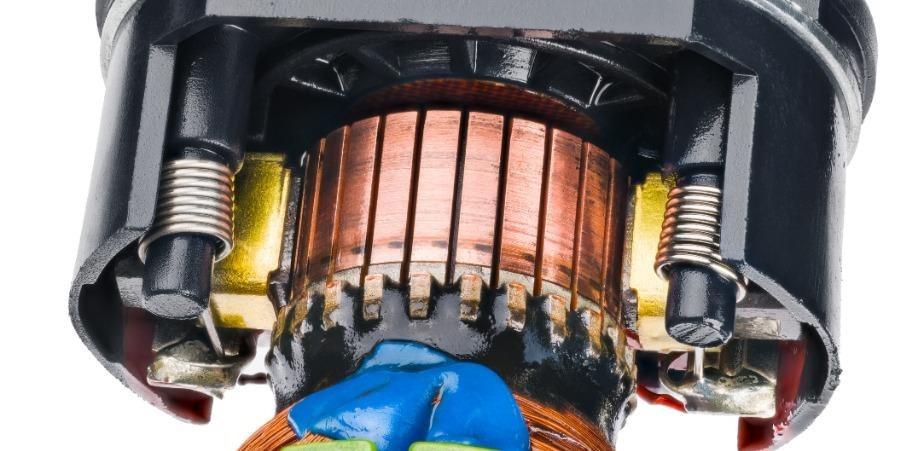
It is commonly manufactured from carbon, graphite, or combinations of carbon and metallic materials. A carbon brush is usually installed inside a brush holder, which guides its movement and maintains contact with the rotating surface through spring pressure.
Carbon brushes are widely used in:
-
DC electric motors
-
Industrial generators
-
Alternators
-
Slip ring induction motors
-
Synchronous machines with brush excitation
-
Railway traction motors
-
Industrial cranes and lifting equipment
-
Selected automotive electrical systems
-
Selected rotating electrical machinery
Not every electric motor requires carbon brushes. Many modern induction motors and brushless motors operate without conventional carbon brush assemblies.
The requirement depends on the electrical design of the machine.
2. How Do Carbon Brushes Work?
The basic function of a carbon brush is to maintain electrical contact with a rotating surface while allowing continuous mechanical movement.
The working process involves several important components.
1. Carbon Brush
The carbon brush is the conductive contact element. It is pressed against a commutator or slip ring and transfers electrical current through the contact surface.
2. Brush Holder
The brush holder keeps the brush in its correct position and guides it as it gradually wears down.
3. Spring System
A spring applies pressure to the carbon brush, helping maintain contact with the rotating surface.
4. Commutator or Slip Ring
The commutator or slip ring is the rotating electrical contact surface.
A commutator is commonly used in DC motors and generators, while slip rings are used in various rotating electrical systems.
Working Principle in a DC Motor
In a brushed DC motor, electrical current flows from the stationary circuit through the carbon brushes to the rotating commutator.
The commutator connects different armature windings as the rotor turns. This switching action helps maintain the appropriate direction of torque.
The carbon brushes therefore play an essential role in transferring current during rotation.
Working Principle in a Generator
In certain generators, carbon brushes transfer current between stationary and rotating electrical components.
Depending on the generator design, brushes may carry excitation current or generated current.
For example, some synchronous generators use slip rings and brushes to supply DC excitation to the rotor field winding.
Other generator designs are brushless and do not require conventional carbon brushes.
Working Principle in Slip Ring Motors
Slip ring induction motors use slip rings and carbon brushes to connect external electrical circuits to the rotating rotor winding.
This arrangement allows external resistance to be introduced into the rotor circuit during starting and, in certain designs, operation.
Carbon brushes provide the sliding electrical connection required by the system.
3. Main Types of Carbon Brushes
Carbon brushes are classified according to their material composition, manufacturing process, electrical properties, and intended application.
The following are some of the major categories used in industrial electrical equipment.
3.1 Electrographite Carbon Brushes
Electrographite brushes are produced using carbon materials that undergo high-temperature graphitization.
This process changes the carbon structure and influences its electrical, thermal, and friction characteristics.
Electrographite brushes are widely used in industrial motors and generators.
Main characteristics:
-
Suitable electrical conductivity
-
Good thermal stability
-
Established industrial wear characteristics
-
Available in different grades for different operating conditions
-
Suitable for various commutator and slip ring applications
Typical applications:
-
Industrial DC motors
-
Generators
-
Large electric motors
-
Railway traction equipment
-
Industrial rotating machinery
The correct electrographite grade depends on current density, peripheral speed, contact pressure, and the condition of the rotating contact surface.
3.2 Resin-Bonded Carbon Brushes
Resin-bonded carbon brushes are manufactured using carbon or graphite particles combined with a suitable resin binder.
The binder influences the mechanical properties and electrical characteristics of the finished brush.
Main characteristics:
-
Material properties can be adjusted through formulation
-
Available for selected motor and electrical applications
-
Different mechanical and electrical characteristics compared with electrographite grades
Typical applications:
-
Selected electric motors
-
Small and medium-sized electrical machines
-
Specialized electrical contact systems
Their suitability must be evaluated according to the motor design, operating speed, current, and contact conditions.
3.3 Metal-Graphite Carbon Brushes
Metal-graphite brushes combine graphite with metallic constituents, commonly copper.
They are designed for applications requiring particular electrical conductivity and contact characteristics.
Main characteristics:
-
Higher electrical conductivity in suitable formulations
-
Available for selected low-voltage, high-current applications
-
Suitable for specific electrical contact arrangements
Typical applications:
-
Low-voltage motors
-
Generators
-
Slip ring systems
-
Selected industrial electrical equipment
The metal content and graphite formulation influence the electrical and mechanical properties of the brush.
3.4 Copper-Graphite Carbon Brushes
Copper-graphite brushes are a type of metal-graphite brush in which copper is the main metallic constituent.
They are often used in applications where higher conductivity is required.
Typical applications:
-
Automotive starter motors
-
Selected alternators
-
Low-voltage electrical motors
-
Certain grounding and current-transfer systems
Copper-graphite brushes are not automatically suitable for every high-current application. Their performance depends on the complete electrical and mechanical operating conditions.
3.5 Natural Graphite Brushes
Natural graphite brushes use natural graphite as an important part of their material composition.
Depending on the formulation and manufacturing process, they can offer useful electrical and friction characteristics in selected applications.
Typical applications:
-
Selected electrical machines
-
Specialized rotating electrical equipment
-
Certain motor and generator systems
The final properties depend on graphite quality, binder composition, processing conditions, and the complete material formulation.
3.6 Silver-Graphite Brushes
Silver-graphite brushes combine silver with graphite and are used in specialized electrical contact applications.
They can provide high electrical conductivity and are selected for particular low-voltage electrical systems.
Typical applications:
-
Specialized electrical equipment
-
Selected signal and current-transfer systems
-
Applications requiring particular electrical contact characteristics
Silver-graphite brushes are not a general-purpose replacement for conventional industrial motor brushes.
4. Understanding Carbon Brush Grades
One of the most important factors in carbon brush selection is the material grade.
A carbon brush grade describes a particular combination of material composition and performance characteristics.
These may include:
-
Electrical resistivity
-
Hardness
-
Bulk density
-
Flexural strength
-
Friction characteristics
-
Wear rate
-
Current-carrying capability
-
Suitable peripheral speed
Different grades are developed to meet different operating requirements.
For example, a brush designed for a high-speed motor may have different characteristics from one designed for a large industrial DC generator.
Common Carbon Brush Grade Categories
| Grade category | General characteristics | Typical applications |
|---|---|---|
| Electrographite | Graphitized carbon with varied electrical and friction properties | Industrial motors and generators |
| Resin-bonded | Carbon or graphite with resin binder | Selected motor applications |
| Metal-graphite | Graphite combined with metallic constituents | Selected low-voltage, high-current systems |
| Copper-graphite | Copper-based metal-graphite formulation | Automotive and specialized electrical equipment |
| Silver-graphite | High-conductivity specialized material | Selected electrical contact systems |
| Natural graphite-based | Natural graphite-based formulations | Selected electrical applications |
These categories are not universal performance rankings.
Two manufacturers may use different grade names for materials with similar intended applications. Conversely, brushes with similar grade descriptions may have different properties.
For this reason, buyers should always confirm the manufacturer's technical data rather than selecting a replacement based only on a grade name.
Important Technical Properties of Carbon Brush Grades
Electrical Resistivity
Electrical resistivity affects voltage drop and electrical losses through the brush.
The appropriate value depends on the machine's electrical design and operating conditions.
Hardness
Hardness is one of the factors influencing the mechanical interaction between the brush and rotating surface.
A brush that is too hard or too soft for the application may contribute to abnormal wear.
Bulk Density
Bulk density is related to the material structure and composition. It can help characterize a carbon brush material but should not be used alone to judge quality.
Flexural Strength
Flexural strength indicates the material's ability to withstand bending stress. It is particularly relevant when considering mechanical durability during installation and operation.
Coefficient of Friction
Friction influences contact heating and wear at the brush and rotating surface interface.
It depends on the brush grade, contact surface, speed, pressure, temperature, and operating environment.
Current Density
Current density describes the electrical current carried per unit of brush contact area.
An unsuitable current density can contribute to excessive heating, electrical instability, or abnormal wear.
5. Carbon Brush Shapes and Construction
Carbon brushes are manufactured in different shapes and configurations according to the electrical machine design.
Common designs include:
Rectangular Carbon Brushes
Rectangular brushes are widely used in industrial motors, generators, and slip ring systems.
They are available in different widths, thicknesses, and lengths.
Chamfered Carbon Brushes
Some brushes have chamfered edges or specially shaped contact surfaces to match the commutator or slip ring arrangement.
The shape must follow the equipment specification.
Carbon Brushes with Flexible Leads
Flexible copper leads connect the brush to the electrical circuit.
Lead length, conductor cross-section, terminal design, and attachment method must be specified correctly.
Carbon Brushes with Terminals
Some designs use different terminal arrangements for electrical connections.
These may include cable terminals, connectors, or other customized connection structures.
Customized Carbon Brushes
Specialized electrical equipment may require non-standard dimensions, material grades, or connection arrangements.
In such cases, customized brushes can be evaluated using drawings, samples, or verified technical specifications.
6. How to Select the Right Carbon Brush
Selecting the correct carbon brush requires more than matching the external dimensions.
The material and design must be compatible with the equipment's electrical and mechanical operating conditions.
The following factors should be considered.
1. Equipment Type
Identify whether the brush is used in a DC motor, generator, alternator, slip ring motor, or another electrical system.
Different equipment designs have different electrical contact requirements.
2. Operating Voltage and Current
The operating voltage and current help determine the required electrical characteristics.
Current density should also be considered because it is influenced by the actual brush contact area.
3. Rotational Speed
Peripheral speed affects friction, heat generation, and brush wear.
The selected grade should be suitable for the machine's operating speed.
4. Brush Dimensions
Measure the brush carefully.
Important dimensions include:
-
Width
-
Thickness
-
Length
-
Chamfer dimensions
-
Lead length
-
Terminal dimensions
Dimensional tolerances are also important for correct installation.
5. Contact Surface Material
Determine whether the brush runs against a copper commutator, a slip ring, or another conductive surface.
The brush material should be compatible with the contact surface.
6. Spring Pressure
Brush pressure influences electrical contact and mechanical wear.
Insufficient pressure may cause unstable contact and sparking, while excessive pressure can accelerate wear and increase friction losses.
7. Operating Environment
Temperature, humidity, dust, vibration, and contamination can affect brush performance.
The working environment should be considered when choosing the material grade.
8. Original Part Number or Sample
When replacing an existing carbon brush, the original part number, technical drawing, or physical sample is an important reference.
However, an original part number should still be checked against the actual equipment and application.
7. Common Carbon Brush Problems and Their Causes
Understanding common brush problems can help maintenance teams identify potential causes and avoid unnecessary component replacement.
| Problem | Possible causes |
|---|---|
| Excessive brush wear | Incorrect grade, excessive pressure, high current density, poor contact conditions |
| Uneven brush wear | Misalignment, uneven contact surface, incorrect holder positioning |
| Excessive sparking | Poor contact, unsuitable grade, electrical overload, incorrect brush pressure |
| Brush overheating | Excessive current, high contact resistance, poor ventilation |
| Brush sticking | Contamination, incorrect holder clearance, damaged holder |
| Commutator or slip ring damage | Incorrect brush selection, surface defects, contamination, unsuitable operating conditions |
| Brush vibration | Mechanical vibration, poor holder design, unsuitable contact conditions |
These symptoms can have multiple causes. A maintenance inspection should examine the complete electrical contact system rather than automatically assuming that the carbon brush itself is defective.
8. Carbon Brush Maintenance and Service Life
Carbon brush service life varies significantly according to the material grade, machine design, operating conditions, and maintenance practices.
There is no single replacement interval suitable for all carbon brushes.
To maintain reliable operation, maintenance teams should regularly inspect:
Brush Length
Measure the remaining usable brush length and compare it with the equipment manufacturer's replacement limit.
Brush Holder Condition
Check for contamination, damage, corrosion, and restricted brush movement.
Spring Pressure
Inspect the spring system and verify that the applied pressure meets the equipment requirements.
Commutator and Slip Ring Surface
Check for abnormal wear, grooves, contamination, discoloration, and surface damage.
Flexible Leads and Connections
Inspect leads, terminals, and connections for looseness, overheating, and mechanical damage.
Carbon Dust
Remove accumulated carbon dust using an appropriate maintenance procedure.
Maintenance work should follow the equipment manufacturer's instructions and relevant electrical safety procedures.
9. OEM Carbon Brushes vs. Customized Replacement Brushes
Industrial buyers can generally choose between original manufacturer products and customized replacement components.
OEM Carbon Brushes
OEM products are supplied according to the original equipment manufacturer's specifications or approved supply arrangements.
They are particularly relevant when an application requires exact approved components or has strict contractual and technical requirements.
Customized Replacement Carbon Brushes
Replacement brushes may be manufactured according to customer drawings, physical samples, or verified specifications.
They can be considered when:
-
Original products are difficult to source
-
Delivery times are too long
-
Original parts have been discontinued
-
Special dimensions are required
-
Alternative sourcing options are needed
A replacement brush should not be considered equivalent to an OEM product simply because its dimensions match.
Material grade, electrical characteristics, mechanical properties, and operating compatibility must also be evaluated.
10. Customized Carbon Brushes from VOCARBON
VOCARBON focuses on carbon brushes, carbon brush holders, slip ring components, and customized electrical carbon products.
We understand that industrial customers often need replacement brushes for specific equipment models, discontinued electrical machines, or applications with non-standard dimensions.
For customized carbon brush inquiries, customers can provide:
-
Original part number or equipment model
-
Carbon brush dimensions
-
Technical drawings or physical samples
-
Required material grade, if known
-
Operating voltage and current
-
Rotational speed
-
Flexible lead and terminal requirements
-
Required quantity
This information helps establish the product specifications and determine whether a suitable replacement can be evaluated.
For applications where the original material grade is unknown, additional operating information may be required before proposing an alternative.
VOCARBON aims to support customers through specification-based evaluation and practical carbon component sourcing.
Conclusion: Choosing the Right Carbon Brush for Reliable Performance
Carbon brushes are essential components in many brushed electric motors, generators, and rotating electrical systems.
Understanding their working principles, material types, and technical grades is important for selecting the correct product.
Electrographite, resin-bonded, metal-graphite, copper-graphite, natural graphite-based, and silver-graphite materials each serve different electrical and mechanical requirements.
The best carbon brush is not necessarily the hardest, most conductive, or most expensive. It is the one whose material properties, dimensions, and operating characteristics match the actual equipment requirements.
For industrial users, proper brush selection and regular maintenance can help maintain stable electrical contact, reduce unnecessary wear, and support reliable equipment operation.
VOCARBON provides carbon brushes, carbon brush holders, slip ring components, and customized electrical carbon products based on customer specifications.
Looking for industrial carbon brushes or customized replacement brushes?
Visit www.vocarbon.com or contact sales@vocarbon.com. Technical drawings, samples, part numbers, and equipment details are welcome for evaluation.