
The Complete Carbon Brush Maintenance Guide: Inspection, Troubleshooting, and Replacement
Carbon brushes are essential components in many electric motors, generators, alternators, and rotating electrical machines. They provide electrical contact between stationary and rotating components, allowing current to flow while the machine operates.
Although carbon brushes are designed to wear gradually during normal operation, improper maintenance, unsuitable material selection, incorrect spring pressure, and poor contact surface conditions can significantly shorten their service life.
For industrial facilities, carbon brush problems can lead to excessive sparking, overheating, unstable electrical contact, commutator damage, unexpected equipment shutdowns, and increased maintenance costs.
A systematic carbon brush maintenance program helps identify potential problems before they develop into serious equipment failures.
This comprehensive guide from VOCARBON explains how to inspect, clean, maintain, troubleshoot, and replace carbon brushes, with practical recommendations for industrial motors, generators, and slip ring systems.
1. Why Carbon Brush Maintenance Is Important
Carbon brushes operate under continuous electrical and mechanical contact conditions.
During operation, the brush slides against a rotating commutator or slip ring while transferring electrical current. This creates friction and gradual material wear.
Normal wear is expected. However, abnormal wear may indicate problems elsewhere in the electrical or mechanical system.
Proper maintenance helps achieve several objectives:
Maintain Stable Electrical Contact
Correct brush positioning and suitable contact pressure help maintain consistent electrical contact between the brush and rotating surface.
Reduce Excessive Sparking
Incorrect brush pressure, contamination, poor contact surfaces, and unsuitable brush grades can contribute to abnormal sparking.
Protect Commutators and Slip Rings
A correctly selected and maintained brush helps reduce unnecessary wear on the rotating contact surface.
Extend Component Service Life
Regular inspection can identify abnormal conditions early, allowing maintenance teams to correct problems before major damage occurs.
Reduce Unplanned Downtime
Planned brush replacement and preventive inspection can reduce the likelihood of unexpected electrical equipment failures.
Control Maintenance Costs
Identifying the underlying cause of abnormal brush wear helps prevent repeated replacement of brushes without addressing the actual problem.
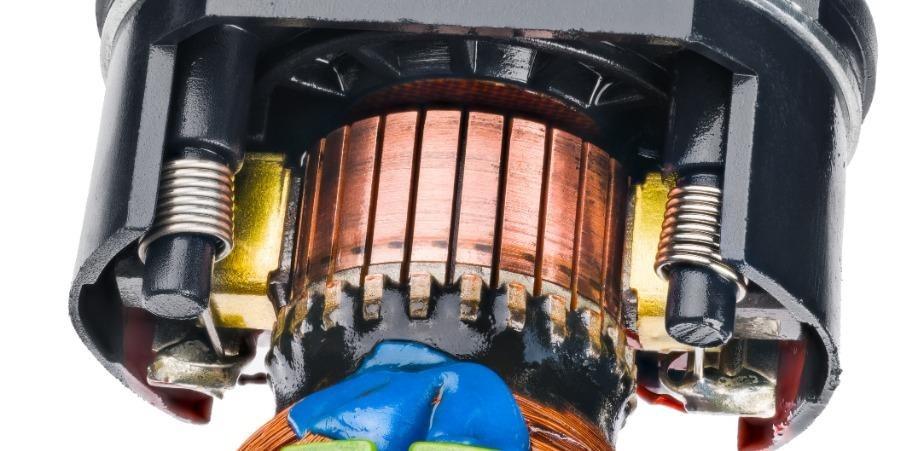
2. Understanding the Main Components of a Carbon Brush Assembly
Before performing maintenance, it is important to understand the components involved in the electrical contact system.
Carbon Brush
The carbon brush is the main electrical contact element.
It is manufactured from different carbon, graphite, or metal-graphite materials depending on the application.
Its properties influence electrical conductivity, friction, wear behavior, and contact performance.
Brush Holder
The brush holder supports the carbon brush and guides its movement toward the commutator or slip ring.
The brush must move freely within the holder without excessive lateral movement.
Spring System
The spring applies pressure to the carbon brush, helping maintain contact with the rotating surface.
Incorrect spring pressure can contribute to unstable contact or accelerated wear.
Flexible Lead and Terminal
The flexible lead connects the carbon brush to the electrical circuit.
Its conductor, connection, and terminal arrangement must be suitable for the machine's electrical requirements.
Commutator or Slip Ring
The commutator or slip ring provides the rotating electrical contact surface.
Its surface condition has a direct influence on brush performance and wear.
All these components should be considered when diagnosing carbon brush problems. Replacing the brush alone may not resolve an underlying mechanical or electrical fault.
3. Safety Precautions Before Carbon Brush Maintenance
Carbon brush maintenance involves electrical equipment and rotating machinery. Safety must always come before inspection or replacement.
Before carrying out maintenance:
-
Follow the equipment manufacturer's maintenance instructions.
-
Isolate the electrical supply using the approved lockout/tagout procedure.
-
Verify that the machine is de-energized before accessing the brush assembly.
-
Allow rotating components to stop completely.
-
Allow hot equipment to cool to a safe temperature.
-
Check for stored electrical energy and follow the applicable discharge procedure.
-
Use appropriate personal protective equipment.
-
Ensure that the maintenance area is clean and adequately illuminated.
Some machines have specific maintenance procedures that permit inspection through designated access points while operating. Such work should only be performed by trained and authorized personnel under the manufacturer's procedures and site safety rules.
Never touch rotating components or attempt to adjust brush holders on energized equipment unless a specifically approved procedure and suitable protection are in place.
4. How to Inspect Carbon Brushes
Regular inspection is one of the most important parts of carbon brush maintenance.
The inspection frequency depends on the machine type, operating hours, electrical loading, environmental conditions, and historical wear patterns.
4.1 Check Carbon Brush Length
Measure the remaining brush length using an appropriate measuring instrument.
Compare the measurement with the manufacturer's specified minimum operating length or replacement limit.
Do not use a universal replacement length for all carbon brushes. Different brush designs and equipment models have different requirements.
A brush that has reached its specified wear limit should be replaced.
4.2 Check Brush Wear Patterns
Examine the contact face and sides of the brush.
Look for:
-
Uneven wear
-
Chipping or cracking
-
Excessive edge wear
-
Abnormal grooves
-
Localized burning
-
Unusual discoloration
-
Broken or loose flexible leads
Wear patterns can provide useful information about the operating condition of the complete brush assembly.
For example, uneven wear may indicate incorrect brush alignment, an irregular contact surface, or inconsistent spring pressure.
4.3 Inspect the Brush Holder
Check the holder for:
-
Mechanical damage
-
Corrosion
-
Carbon dust accumulation
-
Restricted brush movement
-
Incorrect positioning
-
Excessive clearance
-
Loose mounting components
The carbon brush should move freely within the holder throughout its permitted travel.
A brush that sticks inside the holder may lose stable contact with the rotating surface.
4.4 Inspect Spring Pressure
Spring pressure is essential for maintaining suitable electrical contact.
Insufficient pressure may result in unstable contact, excessive sparking, and electrical heating.
Excessive pressure may increase friction and accelerate brush and commutator wear.
Measure spring pressure using the method and limits specified by the equipment manufacturer.
Do not adjust spring pressure based on appearance alone.
4.5 Inspect Flexible Leads and Connections
Check flexible leads for:
-
Broken conductor strands
-
Loose connections
-
Damaged insulation
-
Overheating
-
Corrosion
-
Incorrect terminal installation
A damaged flexible lead may create electrical resistance and localized heating.
4.6 Inspect the Commutator or Slip Ring
Examine the rotating contact surface for:
-
Grooves
-
Uneven wear
-
Scratches
-
Surface contamination
-
Abnormal discoloration
-
Localized overheating
-
Electrical damage
If the contact surface is damaged, replacing carbon brushes without correcting the surface condition may result in repeated brush failure.
5. How to Clean Carbon Brushes and Brush Holders
Cleaning is important because accumulated carbon dust and contamination can affect brush movement and electrical contact.
However, cleaning methods must be appropriate for the machine design.
Cleaning Carbon Brush Holders
The following general procedure can be used when permitted by the equipment manufacturer's maintenance instructions:
-
Isolate the machine and verify that it is safe to work on.
-
Remove the carbon brush according to the approved procedure.
-
Inspect the inside of the brush holder.
-
Remove loose carbon dust using an approved industrial vacuum or suitable non-contaminating cleaning method.
-
Check the holder for corrosion, burrs, and mechanical damage.
-
Verify that the brush can move freely.
-
Reinstall or replace components according to the equipment specification.
Avoid using excessive force when cleaning brush holders.
Do not apply grease, oil, or other lubricants inside the brush holder unless explicitly specified by the manufacturer.
Cleaning Commutators and Slip Rings
Commutators and slip rings require appropriate cleaning methods.
Depending on the machine design, approved methods may include specialized cleaning materials or surface-maintenance procedures.
Do not use aggressive abrasives, unsuitable solvents, or ordinary sandpaper without manufacturer approval.
Abrasive particles or inappropriate cleaning products can damage the contact surface or contaminate the electrical assembly.
For significant surface damage, professional inspection and machining or refinishing may be necessary.
Managing Carbon Dust
Carbon dust is a normal by-product of brush wear.
Excessive accumulation can cause contamination, restricted brush movement, and potentially electrical tracking in unsuitable environments.
Use approved dust extraction and cleaning procedures.
Avoid uncontrolled compressed-air cleaning, which may spread conductive dust into electrical components, bearings, ventilation passages, and surrounding equipment.
6. Common Carbon Brush Problems and Troubleshooting
Carbon brush failures are often symptoms of broader equipment problems.
The following table summarizes common symptoms and possible causes.
| Problem | Possible causes | Recommended inspection |
|---|---|---|
| Excessive brush wear | Incorrect grade, excessive pressure, high current density | Check brush grade, spring pressure, loading |
| Uneven brush wear | Misalignment, uneven surface, holder problems | Check alignment and contact surface |
| Excessive sparking | Poor contact, incorrect pressure, electrical problems | Check brush position, spring force and load |
| Brush overheating | Excessive current, high contact resistance | Inspect connections, loading and ventilation |
| Brush sticking | Carbon dust, corrosion, incorrect holder clearance | Clean and inspect holder |
| Brush cracking | Mechanical stress, unsuitable material, installation damage | Check brush grade and installation |
| Flexible lead overheating | Loose connection, damaged conductor, excessive current | Inspect terminals and electrical connections |
| Commutator damage | Incorrect brush selection, contamination, poor surface condition | Inspect complete contact system |
| Rapid slip ring wear | Unsuitable brush grade, contact pressure, surface problems | Check material compatibility and ring condition |
6.1 Excessive Carbon Brush Sparking
Some electrical contact systems may exhibit limited, controlled sparking under certain operating conditions.
However, excessive or abnormal sparking should always be investigated.
Possible causes include:
-
Incorrect carbon brush grade
-
Insufficient or excessive spring pressure
-
Poor brush alignment
-
Uneven commutator surface
-
Electrical overload
-
Loose electrical connections
-
Mechanical vibration
-
Incorrect brush seating
The correct troubleshooting procedure should identify whether the problem originates from the brush material, brush assembly, rotating surface, or electrical system.
6.2 Rapid Carbon Brush Wear
Rapid wear may result from several factors:
-
Incorrect brush material
-
Excessive contact pressure
-
High current density
-
High peripheral speed
-
Rough or damaged commutator surface
-
Contamination
-
Incorrect brush holder positioning
If replacement brushes repeatedly wear out too quickly, investigate the operating conditions before installing another batch.
6.3 Uneven Brush Wear
Uneven wear can indicate differences in contact pressure, holder alignment, surface condition, or electrical current distribution.
Inspect the complete brush assembly and compare the wear patterns across all brushes.
6.4 Carbon Brush Overheating
Overheating can be caused by excessive current, poor electrical connections, high contact resistance, restricted ventilation, or unsuitable brush material.
Check the electrical circuit and contact assembly before deciding whether a different brush grade is required.
7. How to Replace Carbon Brushes Correctly
Carbon brushes should be replaced when they reach the specified minimum length, become damaged, or show abnormal conditions that require replacement.
The replacement procedure depends on the machine design.
Step 1: Identify the Correct Replacement Brush
Before ordering, verify:
-
Original part number
-
Brush dimensions
-
Material grade
-
Flexible lead length
-
Terminal design
-
Chamfer or contact-face geometry
-
Equipment model
Do not assume that brushes with identical external dimensions are electrically equivalent.
Step 2: Inspect the Brush Holder
Before installing a new brush, check that the holder is clean, undamaged, and free from obstructions.
Confirm that the spring system operates correctly.
Step 3: Check the Commutator or Slip Ring
Inspect the contact surface and determine whether it is suitable for the replacement brush.
If significant surface damage is present, address it according to the equipment manufacturer's maintenance procedure.
Step 4: Install the New Brush
Install the brush in the correct orientation.
Ensure that it moves freely within the holder and that its flexible lead is correctly positioned.
Avoid forcing the brush into the holder.
Step 5: Verify Spring Pressure
Check the spring pressure against the manufacturer's specified value.
Incorrect pressure may affect brush performance and service life.
Step 6: Check Brush Seating
The contact face should be properly matched to the commutator or slip ring surface.
Where brush bedding or seating is required, use the approved method for that specific machine and brush grade.
Do not use an improvised abrasive material or assume that every carbon brush requires the same bedding procedure.
Step 7: Complete Final Inspection
Before returning the equipment to service, check:
-
Brush position
-
Brush holder condition
-
Spring installation
-
Flexible lead routing
-
Electrical connections
-
Clearance and mechanical security
-
Removal of maintenance tools and cleaning materials
Restart and monitor the machine only according to the approved commissioning and operating procedure.
8. Carbon Brush Bedding and Seating
New carbon brushes may require a bedding or seating procedure to establish suitable contact between the brush face and the rotating surface.
The purpose is to achieve appropriate contact over the designed contact area.
Poor seating can result in localized electrical loading, unstable contact, and uneven wear.
The correct procedure depends on the brush material, commutator or slip ring geometry, and equipment manufacturer's recommendations.
Important considerations include:
-
Brush contact-face shape
-
Commutator or slip ring diameter
-
Surface condition
-
Carbon brush grade
-
Required contact area
-
Approved bedding method
After bedding, inspect the contact pattern to verify that it is consistent with the manufacturer's requirements.
Not all brush systems require the same bedding procedure. Some use factory-prepared contact faces or specific installation methods.
9. How Often Should Carbon Brushes Be Inspected?
There is no universal inspection interval for all electrical machines.
Inspection frequency depends on:
-
Machine operating hours
-
Electrical loading
-
Rotational speed
-
Carbon brush material
-
Contact pressure
-
Ambient temperature
-
Dust and contamination
-
Historical wear rate
-
Equipment criticality
A practical maintenance program should establish inspection intervals based on the equipment manufacturer's recommendations and actual operating experience.
For critical machinery, maintenance teams may use regular wear measurements and inspection records to identify changes over time.
Example Carbon Brush Inspection Record
| Inspection item | Recorded information |
|---|---|
| Equipment model | Machine identification |
| Brush part number | Original or replacement part number |
| Brush grade | Material designation |
| Initial brush length | Measurement at installation |
| Current brush length | Measurement during inspection |
| Spring pressure | Measured value |
| Commutator condition | Inspection findings |
| Slip ring condition | Inspection findings |
| Wear pattern | Uniform or abnormal |
| Maintenance action | Clean, monitor, adjust or replace |
| Inspection date | Date of maintenance |
Keeping these records makes it easier to identify abnormal wear and plan future replacements.
10. Choosing the Right Carbon Brush for Longer Service Life
Maintenance alone cannot compensate for an unsuitable carbon brush.
The correct material grade must be selected for the actual electrical and mechanical operating conditions.
Electrographite Carbon Brushes
Electrographite brushes are widely used in industrial motors and generators.
They are available in different grades designed for different speeds, current densities, and contact conditions.
Metal-Graphite Carbon Brushes
Metal-graphite brushes combine graphite with metallic constituents, commonly copper.
They are used in selected applications requiring particular electrical conductivity characteristics.
Resin-Bonded Carbon Brushes
Resin-bonded brushes are used in selected electrical applications where their material characteristics meet the equipment requirements.
Natural Graphite-Based Brushes
Natural graphite-based formulations are used in selected electrical contact applications, depending on their mechanical and electrical properties.
Silver-Graphite Brushes
Silver-graphite brushes are specialized electrical contact materials used where their particular conductivity characteristics are required.
The best brush is not necessarily the hardest or most conductive one. It is the grade that matches the equipment's complete operating requirements.
11. OEM Carbon Brushes vs. Customized Replacement Brushes
For industrial maintenance teams, sourcing replacement carbon brushes can sometimes be challenging.
OEM products are supplied according to original equipment specifications or approved supply arrangements.
However, original parts may have long delivery times, discontinued product numbers, or limited sourcing options.
Customized replacement brushes can be evaluated according to:
-
Technical drawings
-
Physical samples
-
Verified dimensions
-
Material specifications
-
Equipment model
-
Operating voltage and current
-
Rotational speed
-
Contact surface requirements
A customized replacement must be technically evaluated before use.
Matching the original dimensions alone does not establish electrical or mechanical equivalence.
For critical applications, material testing, sample approval, and equipment-specific validation may be necessary.
12. VOCARBON: Carbon Brushes and Customized Electrical Contact Components
VOCARBON focuses on carbon brushes, carbon brush holders, slip ring components, and customized electrical carbon products.
We understand that industrial customers need replacement components that match the actual dimensions and operating requirements of their equipment.
Our product inquiries may involve:
-
Industrial carbon brushes
-
Generator carbon brushes
-
Motor carbon brushes
-
Carbon brushes with flexible leads
-
Customized carbon brush holders
-
Slip ring carbon brushes
-
Special electrical carbon components
For accurate evaluation, customers are encouraged to provide:
-
Original part number
-
Equipment manufacturer and model
-
Technical drawings or physical samples
-
Brush dimensions and tolerances
-
Material grade, if available
-
Operating voltage and current
-
Rotational speed
-
Flexible lead and terminal requirements
-
Required quantity
This information helps establish the specifications and determine whether a suitable replacement solution can be evaluated.
For equipment with discontinued parts or special brush configurations, drawing-based and sample-based requirements can be discussed.
Conclusion: Preventive Maintenance Helps Protect Electrical Equipment
Carbon brushes are relatively small components, but their condition can have a significant influence on the reliability of electric motors, generators, and rotating electrical systems.
A proper maintenance program should include regular brush inspections, wear measurements, brush holder checks, spring pressure verification, contact surface inspection, and timely replacement.
When abnormal wear or sparking occurs, maintenance teams should investigate the complete electrical contact system rather than replacing brushes without identifying the underlying cause.
Correct material selection, accurate dimensions, appropriate installation, and consistent inspection practices all contribute to reliable equipment operation.
VOCARBON is committed to supporting industrial customers with carbon brushes, carbon brush holders, slip ring components, and customized electrical carbon products based on technical requirements.
Looking for replacement carbon brushes or customized carbon brush holders?
Visit www.vocarbon.com or contact sales@vocarbon.com. Technical drawings, samples, original part numbers, and equipment details are welcome for evaluation.